.png)
 9 hours ago
8
9 hours ago
8
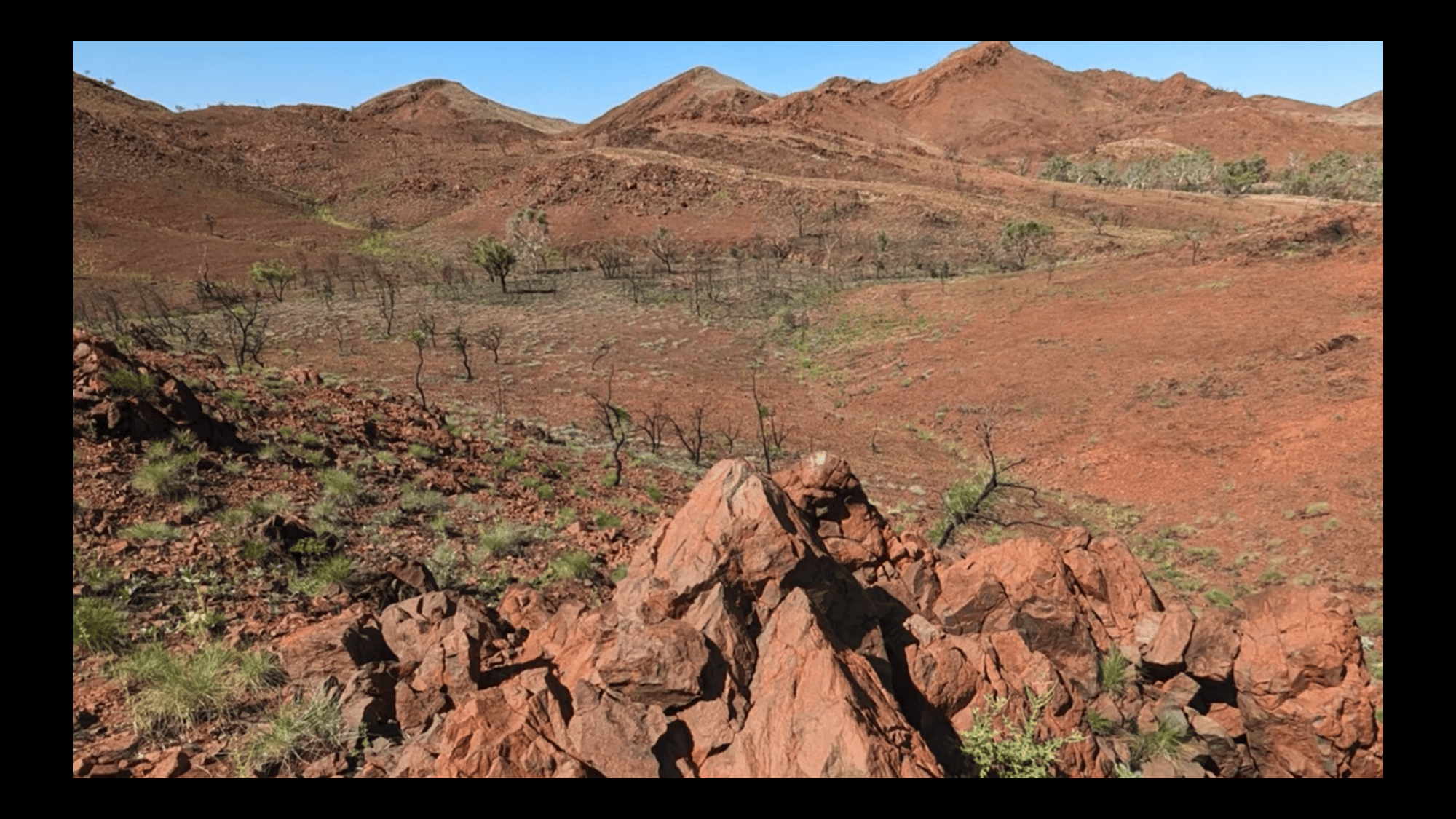
The oldest known asteroid impact site on Earth was created 3.02 billion years ago in what's now Western Australia — not far from where we've seen the oldest traces of life on our planet.
A rock formation in Western Australia's Pilbara region seems to offer evidence of an asteroid slamming into Earth's newly-formed rocky crust around 3.02 billion years ago. That makes the formation, called the North Pole Dome, the oldest evidence of an asteroid impact on Earth, according to a recent study, which dated crystals in the rocks shocked and reshaped by the impact's tremendous heat and pressure.
It's the latest salvo in an ongoing debate about the age of the crater (or what's left of it after billions of years of erosion), and there's more at stake than bragging rights: a crater dating back this deep in Earth's distant past could shed light on the rise of the continents and the origin of life.
A rare glimpse
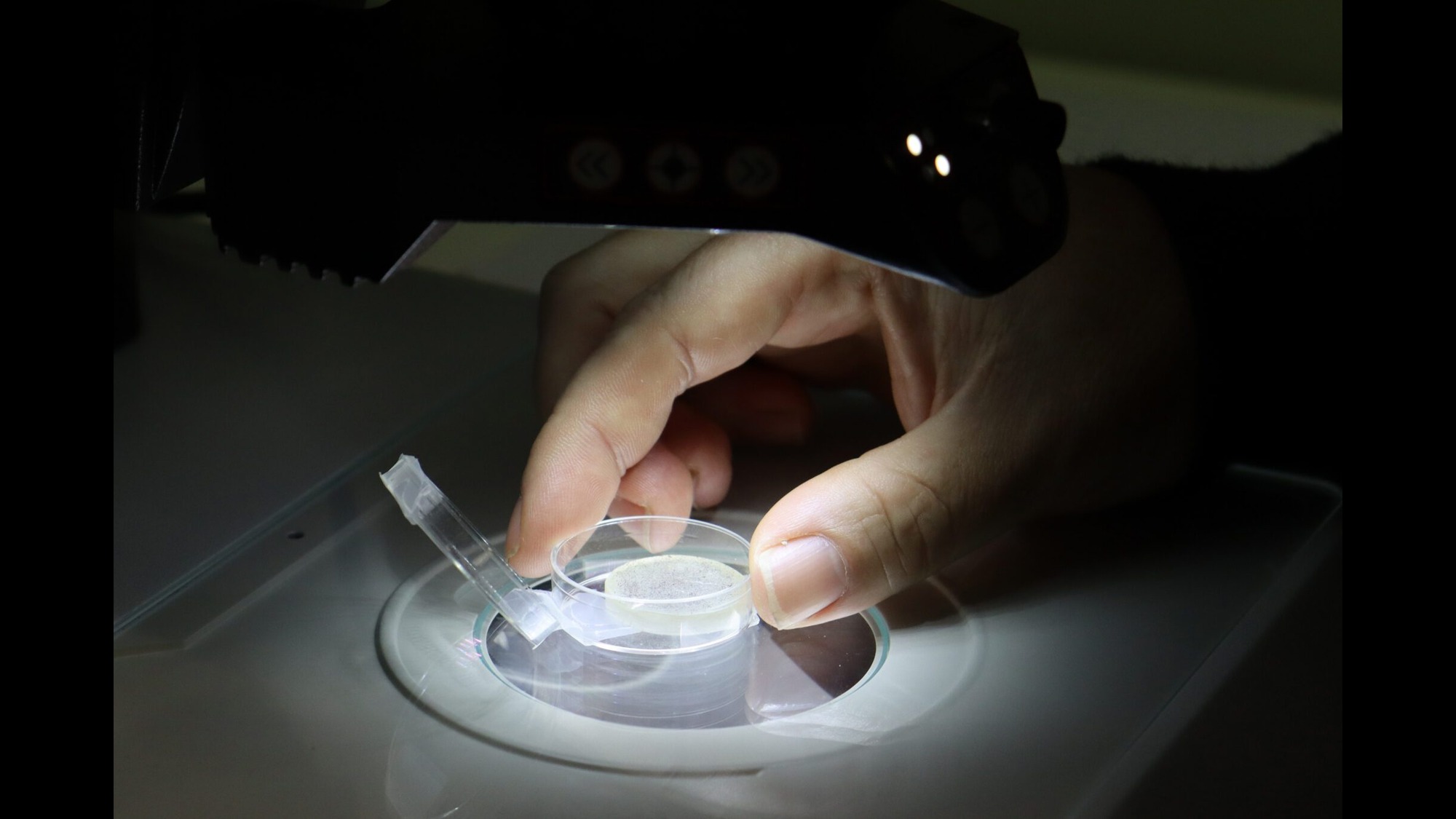
Inside most rocks in Earth's crust, tiny grains of mineral called zircon quietly record the passage of eons. Zircon contains tiny amounts of uranium, which slowly but steadily breaks down into lead; that steadiness is key, because the ratios of those two elements reveal how long it's been since a grain of zircon crystallized from hot, molten rock. In this case, zircon grains told Kirkland and his colleagues that it had been about 3.02 billion years since the tremendous heat and pressure of an asteroid impact melted zircon crystals in the rocks around North Pole Dome.
"Some zircons at the North Pole Dome have unusual branching, skeletal shapes," Kirkland said in an emailed press release. "We interpret these as impact-modified crystals, formed when older zircon was disrupted, partly recrystallized, and in places, regrown during the intense heating caused by the impact."
If Kirkland and his colleagues are right, the area, also called the Miralga Impact Structure, is the oldest trace of an asteroid colliding with our planet. The newly published date makes Miralga a relic of a tumultuous period in our solar system's history, called the Late Heavy Bombardment, when the giant planets were still jockeying for position in their orbits around the sun, flinging asteroids and comets toward the inner solar system in the process (or so cosmologists theorize). Amid this rain of space rocks, Earth was midway through the Archaean Eon, with the planet's surface finally cooling to form a thin crust of solid rock. Earth's surface lay beneath an orangish haze of methane, a little like a warmer version of Saturn's moon Titan.
And somewhere in there, the first life took shape.
The oldest traces of that early life are just a few kilometers from North Pole Dome: limestone stromatolites, made of layers of tiny sediment grains trapped in, and eventually left behind by, sheets of early bacteria. The ones in Pilbara are about 3.5 billion years old, another date courtesy of zircon grains. If the Miralga impact happened 3.02 billion years ago, it struck a world already teeming with overlapping mats of bacteria.
The oldest known Earth rock, a 4.35-billion-year-old sandstone formation (also dated using zircon), lies just a few hundred kilometers south of Pilbara, in the Jack Hills. Why is all of this — the oldest rocks, the oldest asteroid crater, and the oldest traces of life — in Western Australia? It's reasonably likely that crust formed, life emerged, and meteors smashed into the ground millions of years earlier, in places all over the world, but the evidence just happened to be preserved in this area of Australia. Most of Earth's very oldest rocks have long since been reworked by plate tectonics or erosion, basically erasing the first chapters of our geological record.
A heated debate about heated rock
"While the site had previously been identified as an ancient impact crater, its exact age remained uncertain," said Kirkland.
Last year, Kirkland and his colleagues proposed that the impact dated back to 3.47 billion years ago, almost the same age as the nearby stromatolites. In that same paper, the team suggested that the original crater – whose outline has long since eroded away, leaving behind only impact-shocked rocks and tantalizing hints – might have been up to 62 miles (100 km) wide. The 22-mile-wide (35-kilometer-wide) North Pole Dome itself seemed to mark the crater's center; rock in the middle of large craters often rebounds upward after the impact, leaving a peak or dome behind (picture the way the middle of a trampoline flexes upward, captured in a freeze frame).
But another group of geoscientists published a paper a few months later, arguing that Miralga (a name they gave the crater, based on the local Aboriginal peoples' name for the area) couldn't be any more than 2.7 billion years old, and only 10 miles (16 km) wide. That's still substantial, and old enough to be interesting, but too young and too small to have played much of a role in shaping the region's life, or its continental crust.
"By the time of the impact, the Pilbara was already quite old," wrote the study’s authors in an essay at the time (of the paper, not the impact).
The teams agreed on, basically, one thing: the area around North Pole Dome was definitely an impact site, and dating very old rocks is not easy. Both 2025 papers looked at the placement of rocks called shatter cones, which form when the shockwaves of an impact (or, sometimes, an underground nuclear bomb test) pass through rock, leaving behind ripples, striations, or cracks. But based on where the shatter cones appeared in relation to other rock layers, the two teams of scientists drew very different conclusions.
"Ancient craters are incredibly difficult to date, because over billions of years, rocks are altered by heat, pressure, and fluids, which can obscure or reset the original impact signatures," said Kirkland, whose team now argues that the zircon crystal dates are much more precise than either team's previous efforts. "What we've been able to do here is separate the moment of impact from its long geological history."
Curtin University geoscientist Chris Kirkland and his colleagues published their work in the journal Geology.






















/https%3A%2F%2Fsportsmole-media-prod.s3.gra.io.cloud.ovh.net%2Fuploads%2F2026%2F05%2Fscheffler-6a034d9fca412032057779.jpg)
/https%3A%2F%2Fsportsmole-media-prod.s3.gra.io.cloud.ovh.net%2Fuploads%2F2026%2F06%2Ficonsport-111147-0089-1-6a27d006a81d1227497324.jpg)
/https%3A%2F%2Fsportsmole-media-prod.s3.gra.io.cloud.ovh.net%2Fuploads%2F2026%2F06%2Fimago-xinhua-nestory-irankunda-celebrates-scoring-for-australia-in-the-world-cup-on-june-14-2026-6a2f348854d1b663111439.jpg)
 Bengali (BD) ·
  English (US) ·