.png)
 1 week ago
8
1 week ago
8
.jpg?branch=production&width=3840&quality=75&auto=webp&crop=3:2)
"Unmanned Drone" by Kara Walker, "Last Garment" by Simone Leigh, "Rosie the Riveter by Norman Rockwell", A bathing suit designed by Claire McCardell
We asked 25 art-world insiders to tell us about a work of art or design that reflects where American culture is headed, speaks to the present in a meaningful way, or otherwise evokes this moment in time. Here are their answers.
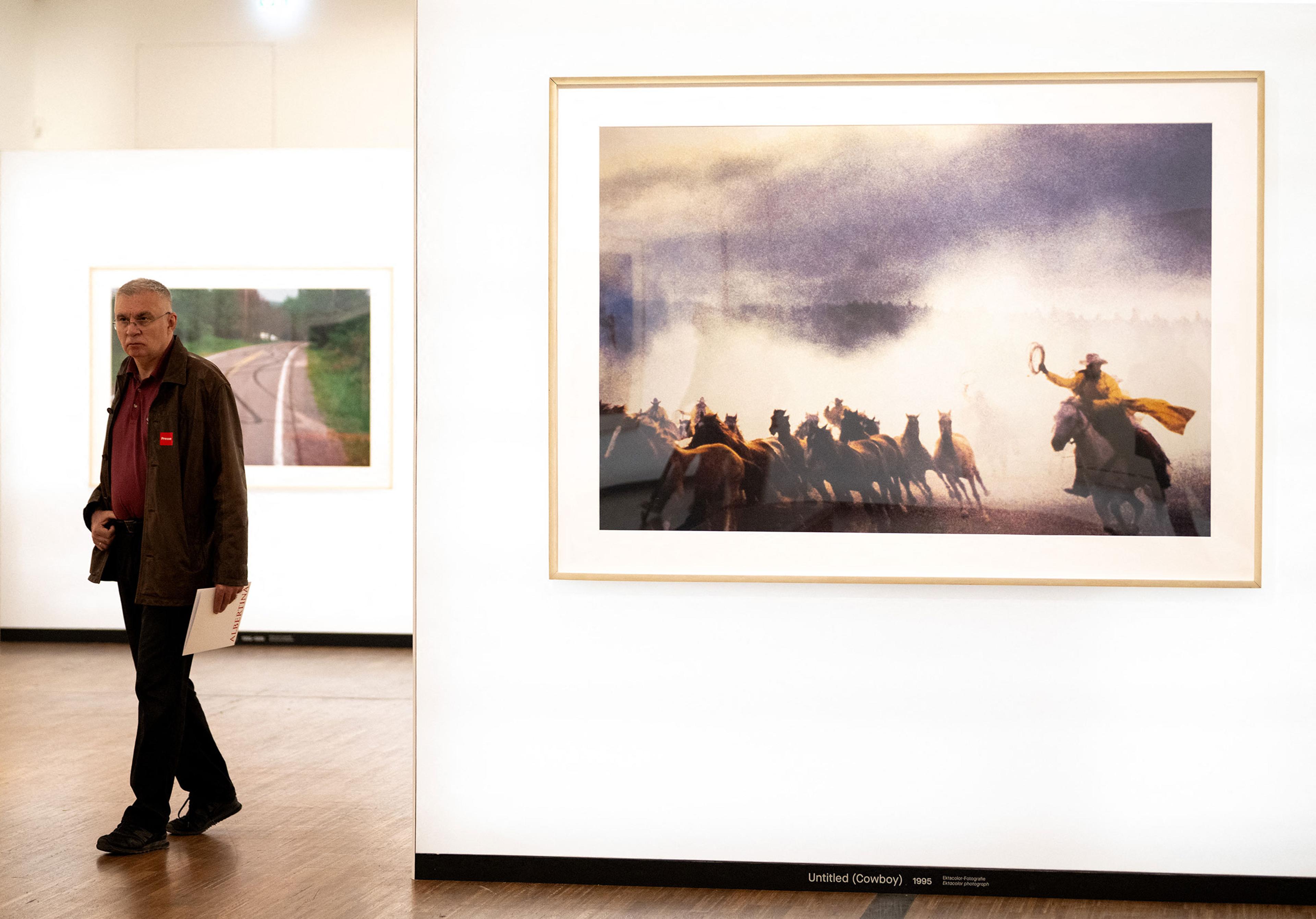
Untitled (Cowboy) 1995 at an exhibition at the Albertina Museum in Vienna, Austria on April 16, 2026. Joe Klamar—AFP/Getty Images
Untitled (cowboy) by Richard Prince
Selected by Olympia Gayot
Richard Prince’s work captures a distinctly American way of constructing identity—pulled from images we already know and slightly reframed until they feel both familiar and off. His reuse of Marlboro cowboys or Instagram posts mirrors a culture where originality is blurred, and meaning is built through repetition and consumption. It lands now because everything already feels like a repost; he’s less critiquing that condition than quietly embodying it.
Gayot is the creative director of women’s & kid’s at J.Crew.
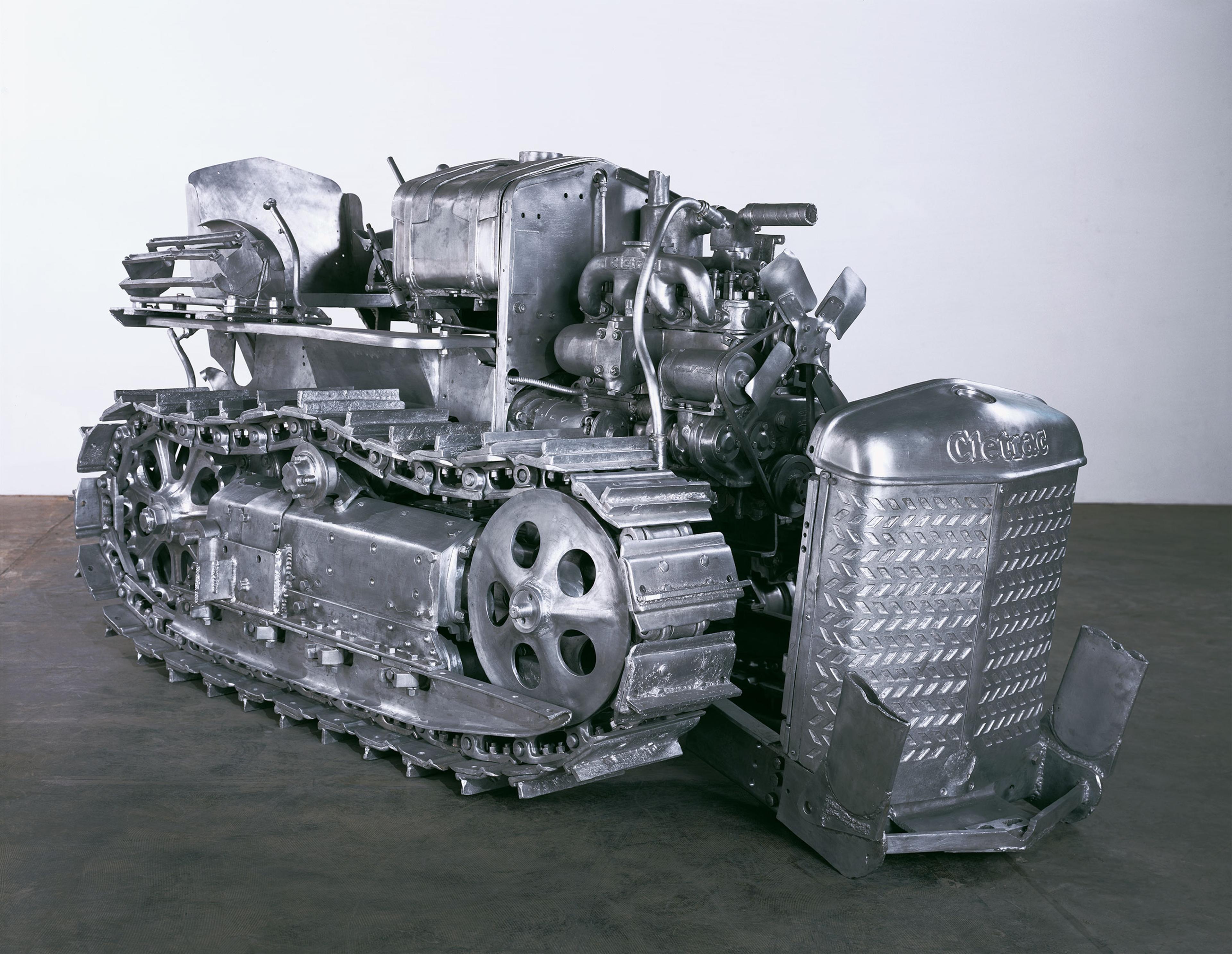
"Tractor" by Charles Ray ©Charles Ray, Courtesy Matthew Marks Gallery
Tractor by Charles Ray
Selected by Noah Horowitz
For an iconic artwork suitable for framing America’s 250th, I keep coming back to Charles Ray’s 2005 Tractor, immaculately cast in stainless steel, monumental, slightly askew, something just a little off, capturing an emblem of our heritage in a way no painting of a flag ever could. This is a country that has always defined itself through work, land, and grit, and right now all of these are heavily contested and not entirely straightforward. Ray captures this contradiction in perfectly sheened sculptural form, frozen forever as a memento of our shared past and uncertain future—no nostalgia, no apology, no resolution.
Horowitz is CEO of Art Basel. This year’s Art Basel’s fair in Basel opens to the public June 18.
The pickup truck
Selected by Yves Behar
The pickup truck’s design is a unique feature of a country that is a lot about "can-do." You can build it; you can do it yourself; you can pick up the materials. It's a culture that I certainly learned about when I came to America, and that is quite different from, I think, countries where crafts are limited to the craftsman. That said, a few years ago we designed an electric one that I believe represents the future. In the past, trucks have sometimes been about ego, gigantic and heavy, but they should now be about efficiency instead.
Behar is the founder of Fuseproject, an industrial design and brand development firm.
Clean Air by H.C. Westermann
Selected by KAWS
When I first encountered Clean Air, it stopped me in my tracks. It’s the kind of work that makes you question everything. Created in 1964, it offers a promise you can never truly verify. I can't help but wonder if Westermann was looking ahead—if he imagined a world where water becomes privatized or satellites compete with the glow of stars. Given the way things are unfolding, it's hard not to ask whether clean air itself might one day become the most valuable commodity of all.
KAWS is an artist. His work will be on exhibit at Space K in Seoul starting in July, and at the New York Botanical Garden starting next spring.
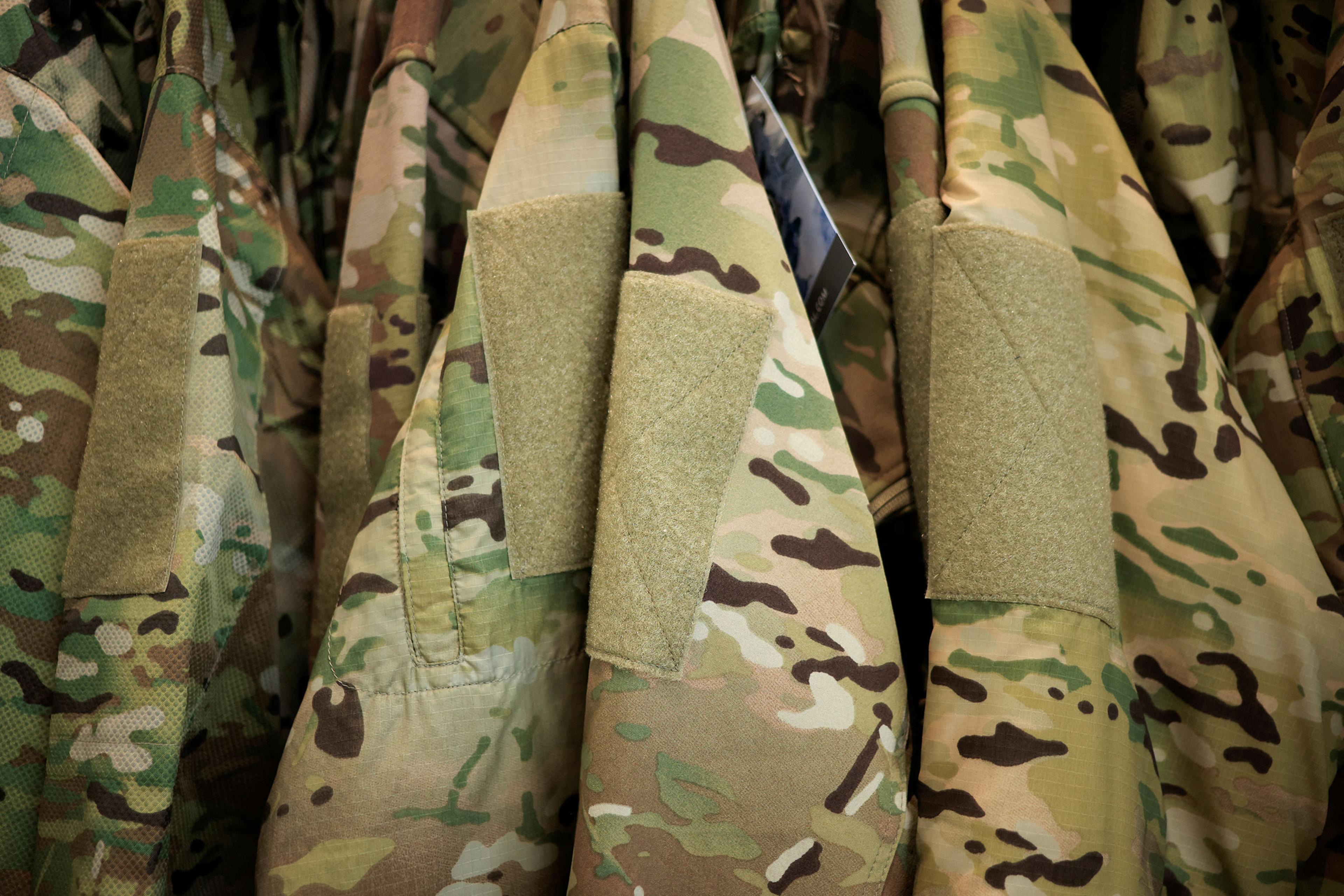
Multicam brand camouflage jackets on display in Tampa, Fla., on May 7, 2024. Luke Sharrett—Reuters
MultiCam camouflage
Selected by Avery Trufelman
As America's global wars transcended any one country, it became harder to find one precise camouflage to outfit the troops. Enter MultiCam: This camouflage, co-invented by a New York City art school graduate, was created to blend in with most environments. The brilliant design was first popularized by members of the special forces, and then (in part because of movies like Zero Dark Thirty and video games like Call of Duty), the pattern spread to the infantry. It’s now showing up on fashion runways and in countries around the world.
Trufelman is the creator and host of the podcast Articles of Interest.
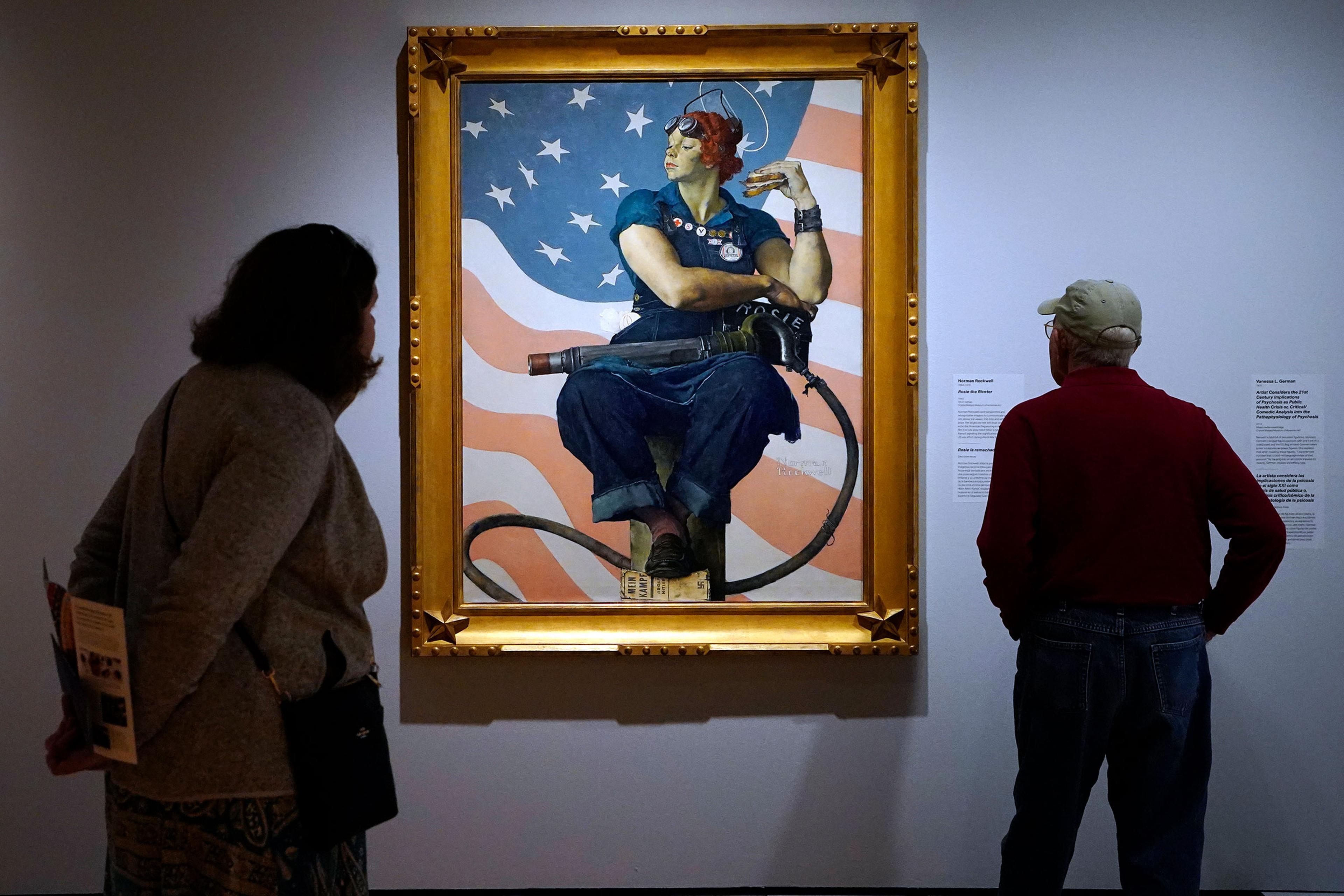
Visitors to the Crystal Bridges Museum of American Art view "Rosie the Riveter" by Norman Rockwell on April 19, 2023. Sue Ogrocki—AP
Rosie the Riveter by Norman Rockwell
Selected by Olivia Walton
Norman Rockwell's 1943 Rosie the Riveter captures something enduring about the American spirit: a woman strong enough to keep a nation moving, confident enough to know her own power, and rooted enough to fight for something larger than herself. American women have always been builders of the nation’s strength, in their homes, their communities, and in the generations they raise. The challenges facing American mothers today—from rural hospitals closing to postpartum care falling short—demand the same grit and purpose Rosie embodied. But Rockwell also understood that American strength was never individual: It was the strength of a people united around a common cause.
Walton is the chairperson of the Crystal Bridges Museum of American Art in Bentonville, Ark., which is expanding with a 114,000-sq-ft expansion set to open this June. She is also the founder and CEO of Ingeborg Investments and Ingeborg Initiatives.
Untitled (Your body Is a battleground) by Barbara Kruger
Selected by Shepard Fairey
A piece of art that is incredibly relevant right now is Barbara Kruger's Untitled (Your body is a battleground). It was created in 1989 when reproductive rights were threatened by a Supreme Court decision, and since then, women's reproductive rights have been further limited by the overturning of Roe v. Wade. A lot of the progress we've made is again under threat. Everyone should look at this piece and consider the concepts, the relevance, the aesthetics—how it was used powerfully in 1989, and how it can be used powerfully now.
Fairey is an artist, activist, and the founder of Obey clothing.
Nano, a comic I collaborated on with Matt Kindt and Natacha Bustos, published by Dark Horse Comics
Selected by Alexandra Grant
In Nano, a group led by women, girls, and hybrid animals bands together to overthrow a toxic, tech-fueled world that minimizes men (making them nano), and helps us return to nature, magic, and joy. Speculative fiction like this is the key to surviving this American moment and imagining a more inclusive future for the next 250 years. Creative collaborations across races, ages, religions, and economic backgrounds will help us overcome and heal from authoritarianism.
Grant is a visual artist.
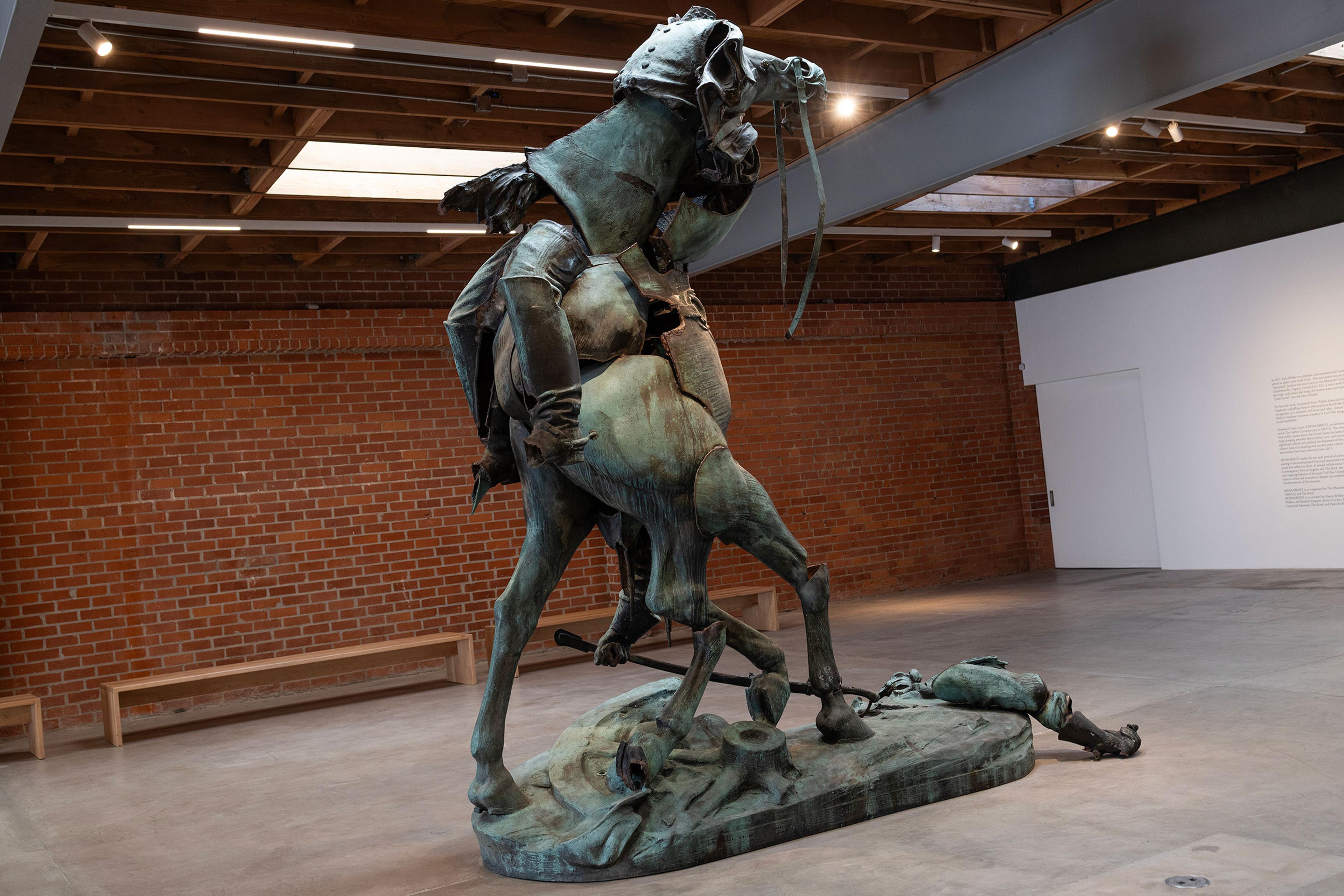
Kara Walker's sculpture "Unmanned Drone" in a gallery in Los Angeles on Feb. 22, 2026. Andrew Lichtenstein—Corbis/Getty Images
Unmanned Drone by Kara Walker
Selected by Deborah Butterfield
Kara Walker’s Unmanned Drone made me stagger. The bronze monument to Confederate General Stonewall Jackson has been slaughtered and reassembled so brutally that to see it is to feel the centuries of violence and hatred toward Black people but also toward the “other.” America needs to figure out that we are all, each of us, the “other.”
Butterfield is a sculptor.
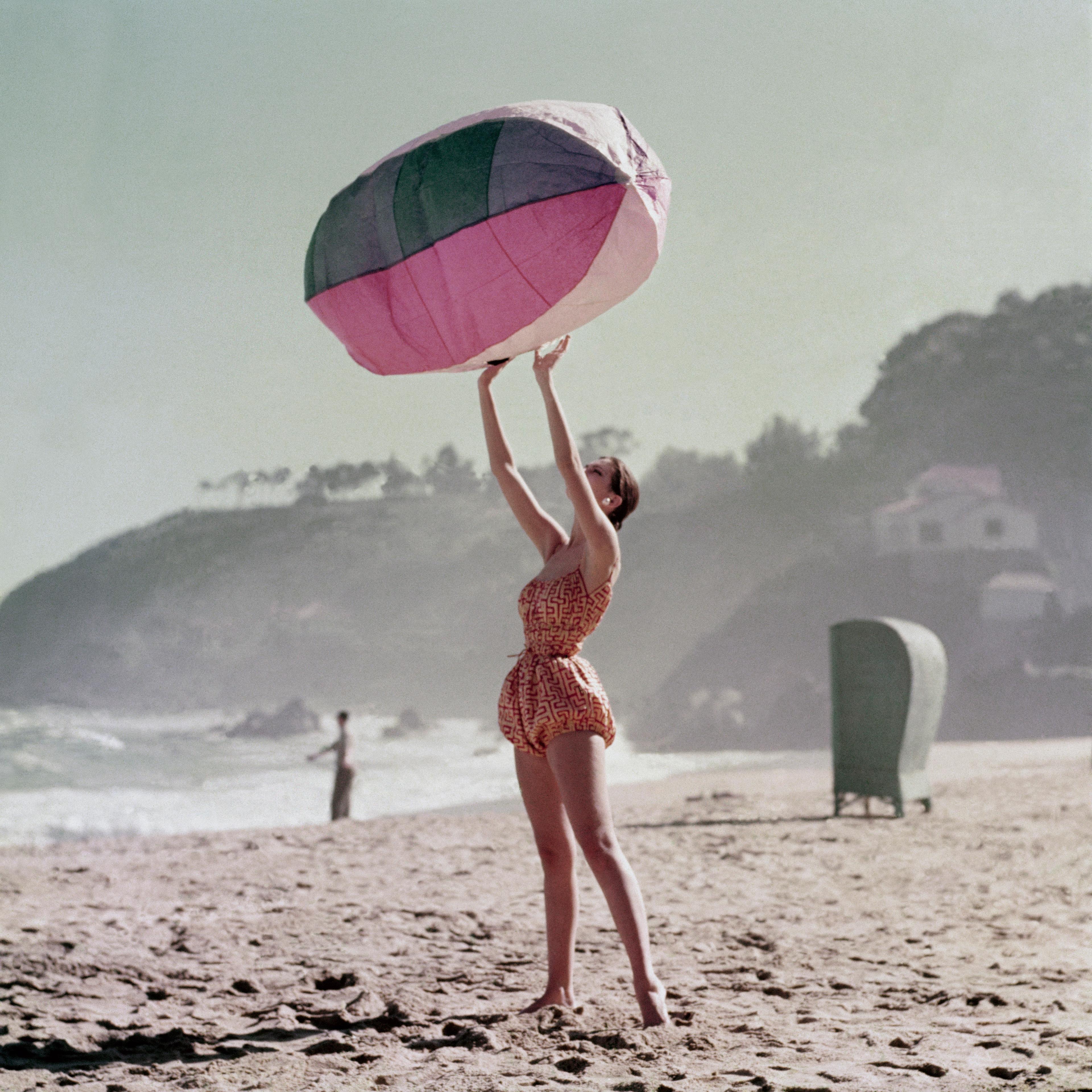
Model on beach wearing print bloomer bathing suit by Claire McCardell. Richard Rutledge—Condé Nast/Getty Images
Sportswear by Claire McCardell
Selected by Tim Gunn
Fashion designer Claire McCardell was a seminal force in America’s mid-century fashion renaissance. She is credited with creating sportswear—comfortable ready-to-wear that eschewed boning and corseting, common elements of womenswear at that time. Her designs were declared “The American Look” and laid the foundation for how we dress today. Among her many designs, I find her romper or “playsuit” to be the most prescient. Additionally, her use of cotton and denim were other bold innovations. Where would today’s athleisure be without McCardell?
Gunn is a fashion consultant, author, and former Project Runway mentor.
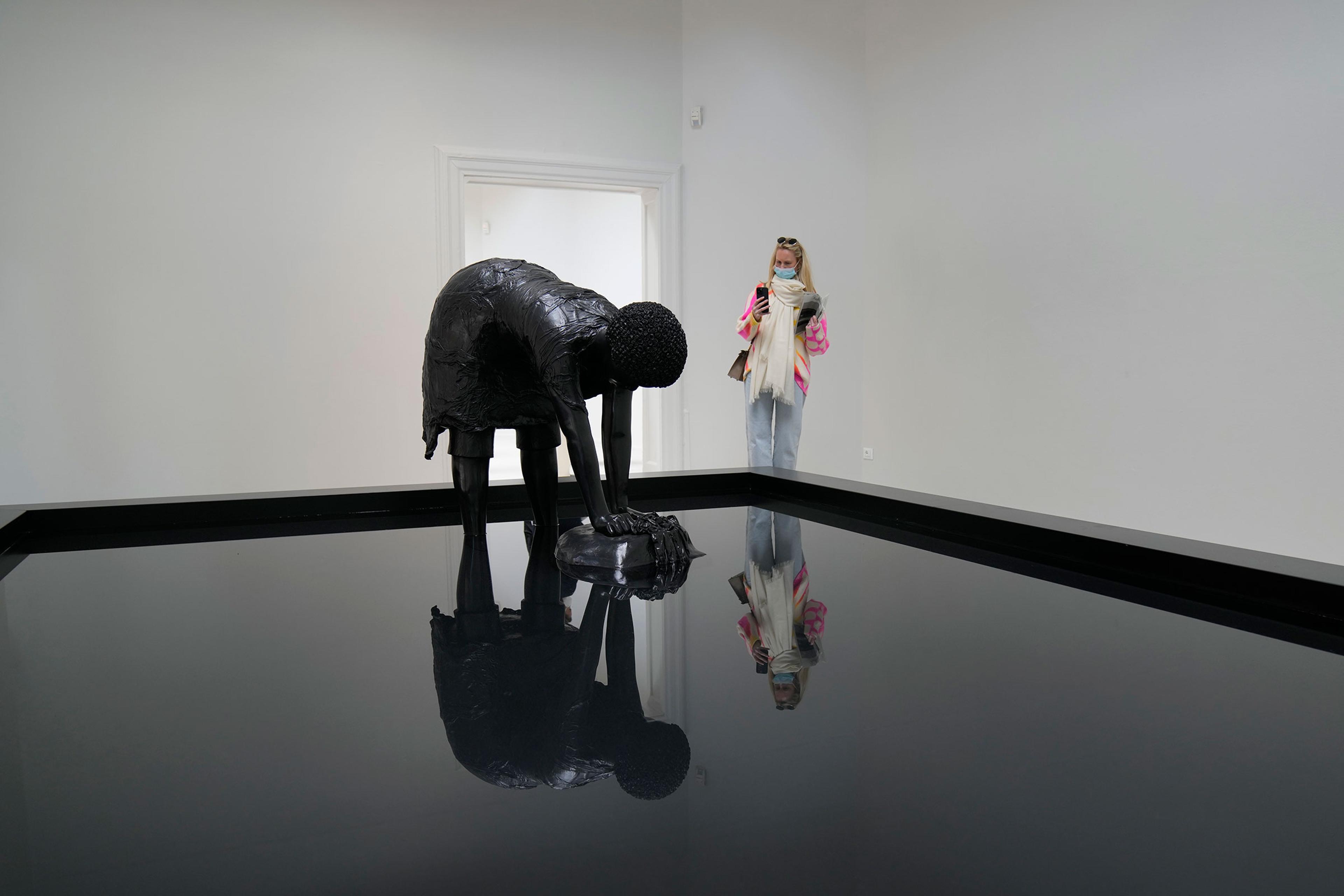
"Last Garment" part of the "Sovereignty" installation by Simone Leigh, at the United States' pavilion during the 59th Biennale of Arts exhibition in Venice, Italy, on April 19, 2022. Antonio Calanni—AP
Last Garment by Simone Leigh (2022)
Selected by Salamishah Tillet
Simone Leigh’s Last Garment was first exhibited at the 2022 Venice Biennale, where Leigh was the first African American woman selected to represent the United States Pavilion. The bronze sculpture features a Black woman washing clothes against rocks in a pool of fresh water. Her pose, bent over and staring at her reflection while in the midst of hard work, was in part inspired by a stereograph photograph made in the late 19th century by C.H. Graves, titled Mammy’s Last Garment, Jamaica. While Graves’ original image both exoticized and invisibilized the laundress by having her body appear as a natural extension of the landscape, Leigh’s beautiful, large-scale installation is entirely unmissable and a monumental tribute to the essential yet too often forgotten contributions of Black women’s labor and self-regard in the making of the Americas, and in the enduring project of building democracy in the United States.
Tillet is Distinguished Professor Africana Studies and Creative Writing at Rutgers University–Newark and a contributing critic at-large at the New York Times.
Custom road marker from Salò, or the 120 Days of Sodom
Selected by John Waters
In the ‘80s, my friend Bob Pringle made me a replica of the sign marking the name of the Italian town featured in the notorious Pasolini film of the same title, about a fictitious group of fascist leaders in 1943 who kidnap teenagers and subject them to freakish sex acts, torture, and political humiliation. Sound familiar? Maybe it's time for an island remake? I read in the news that Cuba could be available soon, and the real-life cast is already assembled in Washington and seemingly available.
Waters is a director, writer, visual artist, and collector. This July, for the 12th year, he’ll host the three-day punk rock festival Mosswood Meltdown in Oakland, Calif.
Men's Retreat by Dana Schutz
Selected by Alec Soth
Scratch the surface of any hot-button issue in America, and you'll discharge a pus of masculine discontent. Beneath all of the culture wars there's gender war, or, more specifically, a gender at war with itself. It took a woman, and one of the best painters of our time, to find a way to artfully depict this mess.
Soth is a photographer and author of the book Advice for Young Artists.
Ocean sounds by Noelia Towers
Selected by Aurora James
Ocean sounds, from 2025, reminds us that beneath the relentless performance of modern American womanhood—the optimization, the curating, the proving—there persists an older, ungovernable ache to simply be held by something vaster than ourselves, something that does not ask us to earn its attention. Towers captures what so many women already know in their bodies but have been taught to distrust: that longing is not weakness but intelligence, a compass pointing us back toward the rhythms we were severed from when we agreed to live entirely inside screens and schedules.
James is the creator of the fashion label Brother Vellies and founder of the Fifteen Percent Pledge, a nonprofit that supports Black-owned businesses.
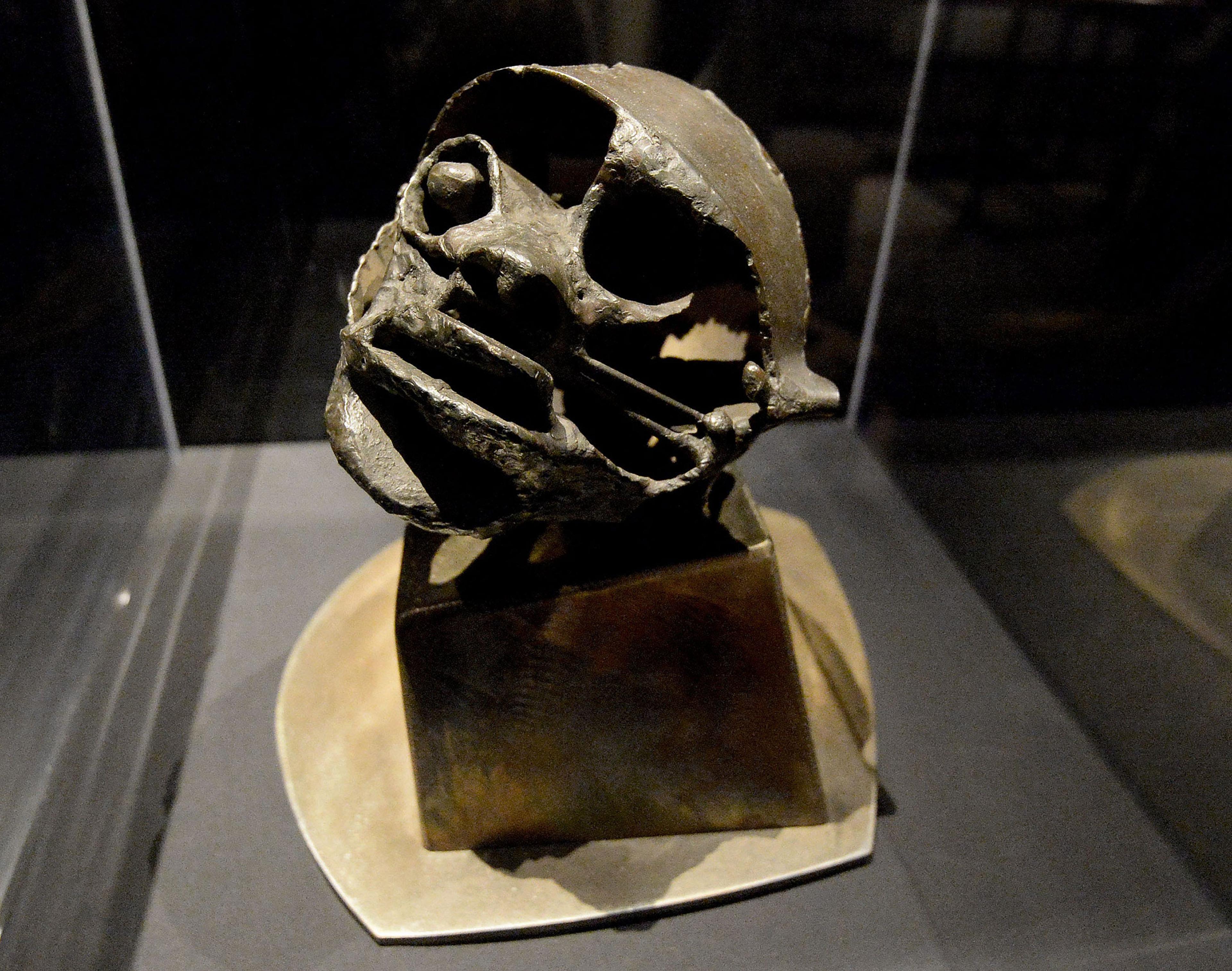
Richard Hunt's sculpture, "Hero's Head", at the Abraham Lincoln Presidential Museum exhibit of his work Wednesday, Oct. 23, 2024. Thomas J. Turney—The State Journal/Reuters
Hero’s Head by Richard Hunt
Selected by Theaster Gates
Richard Hunt was a sculptor of relentless vision; he shaped metal into forms that carried the weight of history and harnessed the ability to lift our aspiration. Over many decades, he built a language of abstraction that insisted on his personal freedom—the freedom of movement, freedom of spirit, and freedom within his life in America. He believed in the dignity of making, carried forth without spectacle. As this nation marks its long-unfinished experiment with freedom, Richard Hunt is a testament to the complexity of Americanness. He is a bridge between an unwilling world that refused to believe in artists and a world that must now reckon with the truth that Black artists have always made America richer.
Gates is a social practice artist and the founder of the Rebuild Foundation.
.jpg?branch=production&width=3840&quality=75&auto=webp)
A memorial sign at Graball Landing, the spot where Emmett Till's body was pulled from the Tallahatchie River just outside of Glendora, Miss., photographed July 24, 2023. Rogelio V. Solis—AP
The bulletproof marker to Emmett Till at Graball Landing, in Mississippi
Selected by Sarah Lewis
President Joe Biden, in his last days in office, announced an act to create a monument to Emmett Till and Mamie Till-Mobley. Near Glendora, Miss., is a marker that offers evidence of the need for this act—a marker that is deliberately 500 lbs. and bulletproof, covered with abrasion-resistant acrylic. It is the fourth time a marker has been placed there; the first three were all shot and thrown in the Tallahatchie River, where Till was found. Till helped inspire the Civil Rights Movement that we know today; the resistance to honoring him speaks to the work that remains before we can all claim freedom on American ground.
Lewis is the founder of the Vision and Justice initiative and currently the John L. Loeb Associate Professor of the Humanities and Associate Professor of African and African American Studies at Harvard University; she is also the organizer of the exhibition and book If Emmett Till Lived…, set to premiere in September.
Central Avenue by Philip Guston
Selected by Katherine Lubar
I see America going down a very dark path, so unfortunately I feel this 1969 Klan painting by Philip Guston most represents certain aspects of American culture at the present moment. In Guston’s later Klan paintings, he made the Klansmen more cartoon-like and less visually threatening, which corresponds to the more recent attempts to sanitize racism, and the less obvious yet underhanded ways to disenfranchise people likely to vote a certain way. The Klansmen in this painting drive around what could be a detention building, throwing their power around and warning of an America that could easily descend into fascism.
Lubar, a visual artist, is a Pollock-Krasner Foundation grant recipient.
Atopolis: For Édouard Glissant by Jack Whitten
Selected by Glenn Lowry
Jack Whitten’s magisterial 2014 painting pays homage to the great Caribbean poet and philosopher. At the same time, it evokes the America I most admire. Like the thousands of small individual black, white, and blue acrylic tiles that make up the painting, our country is composed of millions of voices and lives from around the world. As an American of African descent, Whitten understood that we can be simultaneously from nowhere (literally “no place,” or “atopolis” in Greek) or everywhere; that belonging is a state of mind, not simply given by geography but something we imagine, build, and continually remake together. The painting’s genius lies in the way its individual elements remain distinct while also dissolving into a larger composition. Each piece can be seen clearly on its own, yet together they create something deeper and more powerful than any one part alone. It’s a potent reminder of how our collective importance is enriched by our collective differences.
Lowry served as director of the Museum of Modern Art in New York City from 1995 to 2025.
Selected by Hank Willis Thomas
Is it me or are things getting a little iffy? Some of us have been feeling it for a long time. Some of us are just looking up. It’s time for deep thinking, deep feeling, deep listening, and deep breathing.
Thomas is a conceptual artist.
Or, the Whale Vol. 1–3 by Bethany Collins
Selected by Leilani Lynch
Collins’ practice reexamines literary and sonic works from American history to draw out meanings that resonate in the present. In this series, she revisits Moby-Dick; or, The Whale (1851) through a painstaking transcription using corrosive iron gall ink on onion skin paper. Often described as a prophetic American text, Melville’s novel warns of the dangers of following an unrepentant leader on myopic pursuits. Collins’ labor-intensive process of transcription imbues the work with both the threat of decay and the possibility of survival, reflecting a present defined by precarity, resistance, and the choice not to go down with a sinking ship.
Lynch is curator at the Museum of Contemporary Art (MCA) Denver.
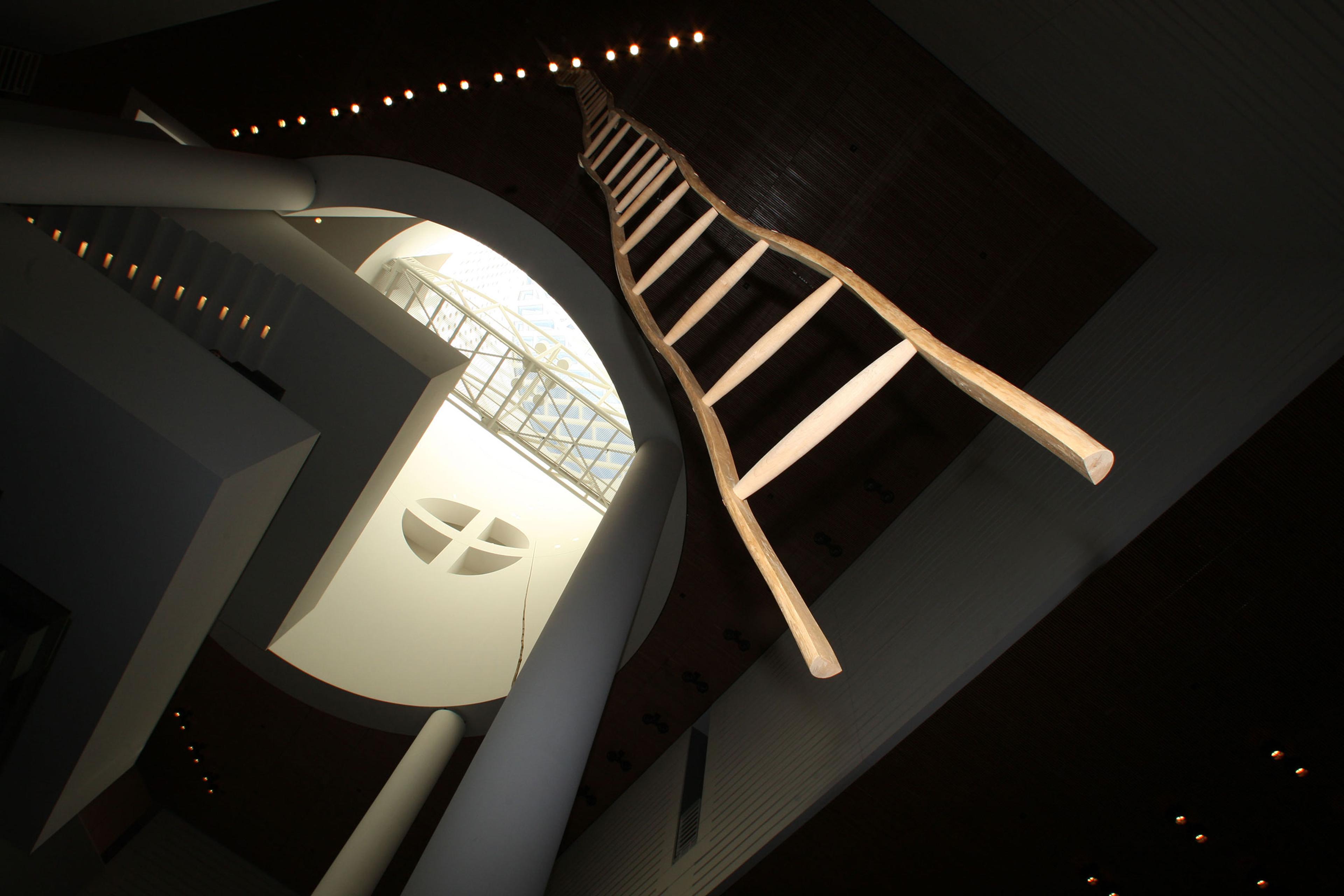
"Ladder for Booker T. Washington" (1996) by Martin Puryear at SFMOMA in San Francisco, on Oct. 24, 2008 Liz Hafalia—The San Francisco Chronicle/Getty Images
Ladder for Booker T. Washington by Martin Puryear
Selected by Norman Teague
I chose this 36-ft. ladder-like structure by Martin Puryear because it transforms a familiar tool or piece of equipment of task and labor into a powerful metaphor for Black aspiration, upliftment, and the long climb toward dignity in America. The way the ladder narrows into perspective as it rises suggests that progress is possible, yet the path becomes increasingly wiggled, fragile, and distorted. The work resonates with my own belief that forms and objects should hold memory, embrace cultural character, and the possibility of transcendence all at once. For a moment like America’s 250th, the sculpture becomes less about Booker T. Washington alone and more about this nation’s unfinished climb toward equity, citizenship, and collective becoming.
Teague is a social practice artist, designer, and furnituremaker.
The School for Temporary Liveness Vol. 4: Experiments in Performance, Practice, and Pedagogy
Selected by Legacy Russell
The School for Temporary Liveness, co-organized by artists Lauren Bakst and Niall Jones, was a three-day gathering of performances, workshops, readings, and conversations presented in July 2025 at The Kitchen. It reframed the idea of “school,” inviting audiences to become active students in collective study and exchange, rather than passive spectators. To turn art into a temporary community of learning helps guide us in understanding how to reimagine institutional models, as well as disrupts assumptions about “truth” and “knowledge.” In a moment when we are constantly navigating the cognitive dissonance of national and international instability, this gathering showed us how to reclaim learning and experimentation as an empowered part of collaborative political, cultural, and social work.
Russell is the author of Black Meme: A History of the Images that Make Us and executive director & chief curator at The Kitchen, New York City's center for experimental art.
Killer Over Water and Late Trees #5 by Carroll Dunham
Selected by Laurie Simmons
The painter Carroll Dunham is my husband, so I often watch his subjects appear years before I find the social context his imagery connects to. Killer Over Water, from 2000-2001, speaks to a kind of American rugged individualism that increasingly leans into violence. What we used to perceive as the lone wolf now feels like a frightening pack. Carroll's ambiguous characters reflect our current anxiety that violence can erupt without clear logic or context. His Late Trees series “grows” in a parallel dimension where Utopia is unspoiled, idyllic, green, and devoid of human presence, both Edenic and post-apocalyptic.
Simmons is a photographer and filmmaker.
Couple (2009) by Louise Bourgeois
Selected by Jenny Holzer
BLUNT NOW.
Holzer is a conceptual and installation artist.
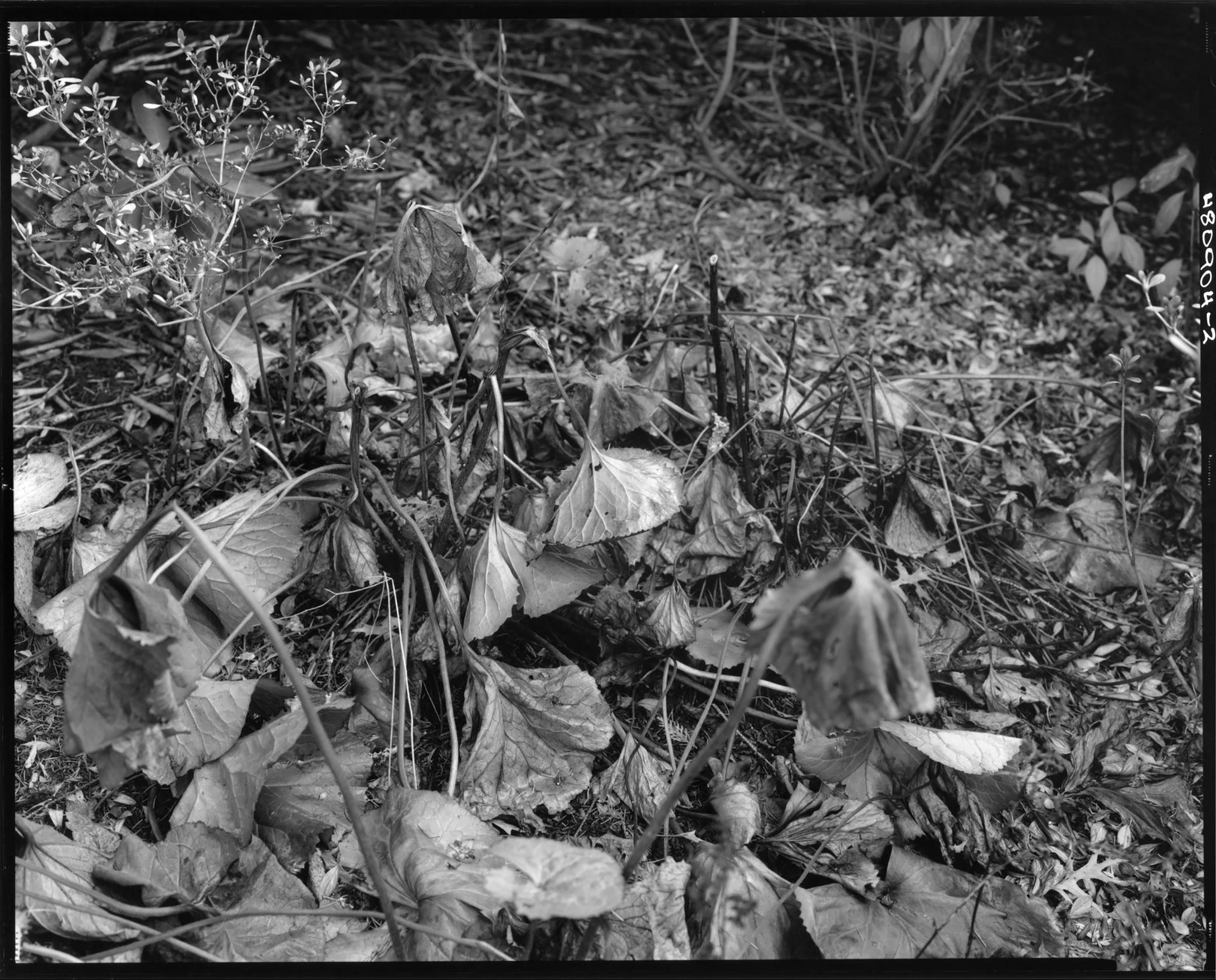
Stephen Shore; Tivoli, NY, November 22, 2025
Tivoli, New York, November 22, 2025, by Stephen Shore
Selected by Stephen Shore
In the late 1960s, when I was spending a good bit of my time in London, I kept up with the news from home by reading, every morning, The International Herald Tribune. This was a time of the Vietnam War, the protests, the Civil Rights Movement, and the MLK and RFK assassinations. The country felt as though it was truly falling apart. Yet each time I returned home, I found that, despite the searing import of these events, life went on: People went to work, they played ball in the park, the seasons changed, and gardens emerged from their winter dormancy. The Trib didn’t report this. It gave the news; it didn’t describe the sinews that held life together.
Stephen Shore is author of the forthcoming The Mental Image and director of the photography program at Bard College, where he is the Susan Weber Professor in the Arts.
Photo-Illustration Source Images: Unmanned Drone, Patrick T. Fallon—AFP/Getty Images; Last Garment, Vincenzo Pinto—AFP/Getty Images; Norman Rockwell, Rosie the Riveter, 1943, Oil on canvas, 52 x 40 in. Crystal Bridges Museum of American Art, Bentonville, Arkansas, 2007.178. Photography by Dwight Primiano., Claire McCardell. Richard Rutledge—Condé Nast/Getty Images
Correction, April 28, 2026: The original version of this article misstated Leilani Lynch's job title—she is now a curator, not an associate curator—and the title of Alec Soth's book, which is Advice for Young Artists, not Young Authors; in addition, Salamishah Tillet is now distinguished professor at Rutgers and Theaster Gates no longer works at UChicago.

















/https%3A%2F%2Fsportsmole-media-prod.s3.gra.io.cloud.ovh.net%2Fuploads%2F2026%2F05%2Fchamp-69fa166311171530187348.jpg)

 Bengali (BD) ·
  English (US) ·